 Skip to content



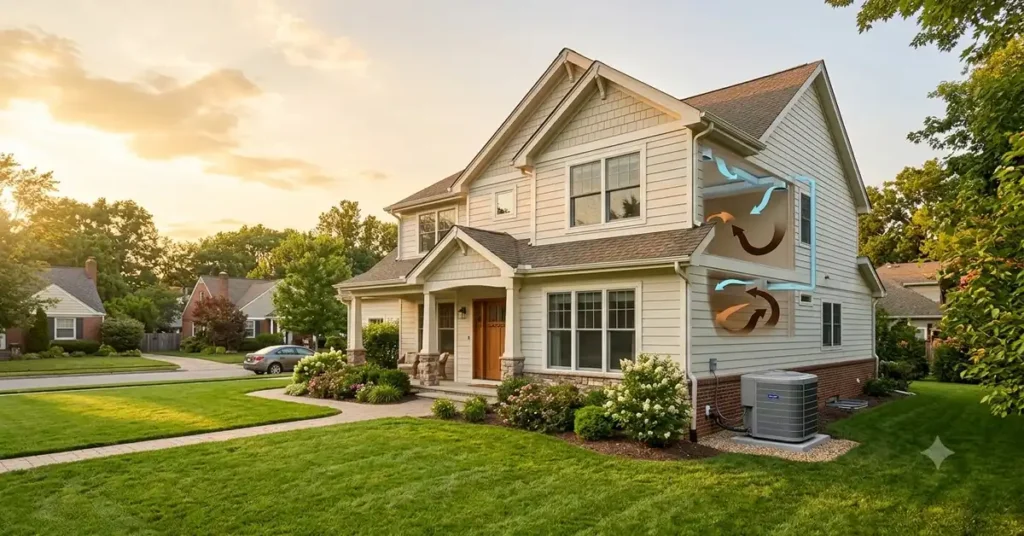
What does HVAC stand for? HVAC stands for Heating, Ventilation, and Air Conditioning. It is the single system in your home that keeps you warm in winter, cool in summer, and breathing clean air year round. If you want help with any part of it in Belmont or Gaston County, you can reach our HVAC services team any time, day or night.
Key Takeaways
- HVAC means Heating, Ventilation, and Air Conditioning. It is one connected system, not three separate machines.
- Most Belmont and Gaston County homes run a heat pump. Our mild winters make heat pumps the common choice over gas furnaces.
- The ductwork ties it all together. Leaky ducts can lose about 20% to 30% of the air your system moves, according to ENERGY STAR duct research.
- Ventilation is the forgotten letter. It controls humidity and air quality, which matters a lot in our humid summers.
- A yearly tune-up keeps the whole system honest. Small problems in one part drag down the rest.
What Each Letter in HVAC Means
HVAC is one of those words you see on a repair truck or a thermostat and never stop to unpack. Here is the plain version. Each letter stands for a job your home comfort system does.

H is for Heating
Heating warms your home when it gets cold outside. In most Gaston County homes this comes from a heat pump. In some homes it comes from a gas furnace. The heat moves through your vents and warms every room from one central source.
V is for Ventilation
Ventilation is the air exchange. It pulls stale indoor air out and brings fresh air in. It also moves air across filters to catch dust, pollen, and pet dander. Good ventilation controls moisture too, which keeps mold and that damp, heavy feeling out of your house. In the Carolina Piedmont, where summers are humid, this letter earns its keep.
AC is for Air Conditioning
Air conditioning cools your home in summer. It does not just lower the temperature. It also pulls moisture out of the air, which is why a cooled room feels crisp instead of clammy. For cooling help, see our air conditioning services page.
How Does an HVAC System Actually Work?
Think of your HVAC system as one loop with a few main players. They all talk to each other. When one part slips, the rest feel it.
Knowing what does HVAC stand for matters for your budget too. Heating and air conditioning made up 52% of household energy use in 2020, according to the U.S. Energy Information Administration, so the system behind those letters is the biggest energy user in most homes.
Here is the basic flow, step by step:
- The thermostat reads the room. It compares the temperature in your home to the number you set. When the two do not match, it tells the system to run.
- The equipment makes heat or cold. A heat pump or furnace handles heating. An outdoor condenser and indoor coil handle cooling.
- The blower moves the air. A fan pushes conditioned air into your ducts.
- The ducts deliver it. Air travels through the duct runs and out the vents into each room.
- Return vents pull air back. The system draws room air back through a filter and starts the loop again.
Every part depends on the others. A clogged filter starves the blower. A refrigerant leak weakens the cooling. A gap in the ducts leaks your paid-for air into the attic. That is why a whole-system view beats chasing one part at a time.
The Main Parts of a Home HVAC System
You do not need to be a technician to know the names. Knowing them helps you describe a problem when you call for service, and it helps you spot trouble early.
| Part | What It Does | Where It Lives |
|---|---|---|
| Thermostat | The brain. Tells the system when to run. | On a wall inside |
| Heat pump or furnace | Produces the heat | Outside (heat pump) or in a closet/attic (furnace) |
| Condenser unit | Releases heat outdoors when cooling | Outside, next to the house |
| Evaporator coil | Absorbs heat from indoor air | Inside, near the air handler |
| Blower / air handler | Moves air through the ducts | Closet, attic, or crawlspace |
| Ductwork | Carries air to and from rooms | Attic, walls, crawlspace |
| Air filter | Traps dust and keeps air clean | At the return vent or air handler |
Common Types of HVAC Systems in North Carolina Homes
Not every home has the same setup. Here in Gaston County, the climate shapes what makes sense. Our winters are mild and our summers are hot and sticky. That points most homeowners toward one answer.

Heat Pump Systems (Most Common Here)
A heat pump handles both heating and cooling with one piece of outdoor equipment. It moves heat instead of burning fuel. In winter it pulls warmth from the outdoor air and brings it inside. In summer it runs in reverse and pushes heat out. Because North Carolina winters rarely stay brutally cold for long, a heat pump covers almost the whole year on its own. Most of the homes we service in Belmont run one.
Gas Furnace With Central AC
Some homes pair a gas furnace for heat with a separate central air conditioner for cooling. This setup shines in colder regions. In our area it shows up in homes with an existing gas line or where a homeowner prefers the fast, strong heat a furnace gives.
Ductless Mini-Split Systems
A ductless mini-split skips the duct runs. It heats and cools specific rooms or zones with a wall unit. These work well for additions, sunrooms, garages, and older homes that never had ducts. They also let you set different temperatures in different rooms. See our ductless mini-split installs page for details.
Signs Your HVAC System Needs Attention
Your system usually warns you before it quits. Catch these early and you often avoid a bigger repair bill. Watch for:
- Weak airflow from the vents, or some rooms that never get comfortable
- Strange noises like grinding, banging, or a constant hum
- Higher power bills with no change in how you use the system
- Short cycling, where the system turns on and off every few minutes
- Odd smells, musty or burning, when the system runs
- Humidity indoors that stays high even with the AC on
If you notice any of these, it is worth a look before the heat of summer or the cold of a January morning. A small fix now beats a failure during a heat wave.
How to Keep Your HVAC System Running Longer
A home HVAC system is a real investment. Treated right, it lasts well. The U.S. Department of Energy notes that proper maintenance keeps a system running near its rated efficiency and stretches its service life. A few habits do most of the work:
Once you know the answer to what does HVAC stand for, the upkeep makes sense: every part has to move air freely. ENERGY STAR warns that airflow problems can cut a system’s efficiency by up to 15%.
- Change the air filter. Check it monthly and swap it every one to three months. This is the single easiest thing you can do.
- Keep the outdoor unit clear. Pull weeds, leaves, and grass clippings away from the condenser so it can breathe.
- Book a yearly tune-up. A pro checks refrigerant, electrical parts, and airflow before each season. Our HVAC maintenance plans handle this for you.
- Seal and insulate ducts. Leaky ducts waste a big share of your conditioned air, per ENERGY STAR sealing guidance. Sealing them pays you back every month.
- Mind the thermostat. A programmable or smart thermostat trims runtime when you are asleep or away.
Frequently Asked Questions About HVAC
What is the difference between AC and HVAC?
AC is just one part of HVAC. Air conditioning cools your home. HVAC is the whole system, which also heats your home and handles ventilation. So every AC is part of an HVAC system, but HVAC covers much more than cooling alone.
How long should an HVAC system last?
Most home HVAC systems last 15 to 20 years with regular care. Heat pumps often land closer to 10 to 15 years because they run year round. Our guide on how long HVAC systems last in North Carolina covers it in detail. A system that is neglected can fail much sooner, which is why yearly maintenance matters so much.
How much does a new HVAC system cost?
Cost depends on the size of your home, the type of system, and the efficiency you choose. A simple replacement sits well below a full high-efficiency upgrade with new ductwork. The honest answer is that it takes a load calculation for your specific home to give a real number, which is why we quote in person at no charge.
Does every home have a furnace?
No. Many North Carolina homes use a heat pump for heating instead of a furnace. A furnace burns gas or runs on electric heat strips. A heat pump moves heat instead of making it. In our climate, the heat pump is the more common choice.
How often should I service my HVAC system?
Once a year at a minimum, and twice a year is better. The ideal schedule is a heating check in the fall and a cooling check in the spring. That way each side of the system gets looked at right before the season it works hardest.
Need HVAC Help in Belmont or Gaston County?
Now that you know what HVAC stands for and how the parts fit together, the next step is easy. If something feels off with your heating or cooling, or you just want a system check before the season turns, call Gerald Griffin Heating and Cooling Services at (980) 277-5122. You will talk to a local team, not a call center. We offer 24/7 emergency service and free estimates on new systems, and we serve Belmont, Gastonia, Mount Holly, and all of Gaston County.
Gerald Griffin has worked in heating and cooling since 1996 and founded Gerald Griffin Heating and Cooling Services in 2013. He is a licensed North Carolina heating contractor, License #32307. Learn more about meet our Belmont team.